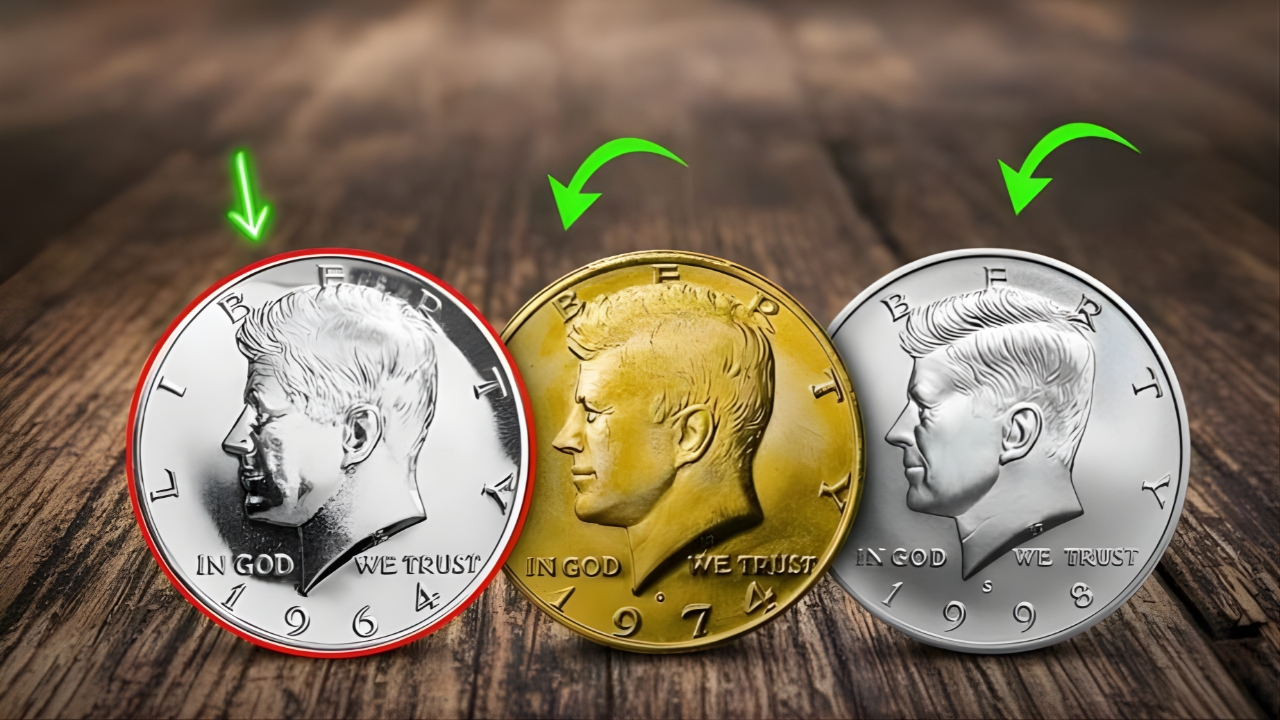
The Kennedy Half Dollar remains one of the most emotionally significant and widely collected coins in American history. Introduced in the aftermath of President John F. Kennedy’s assassination, the coin quickly became a symbol of remembrance, patriotism, and national pride. By 2026, the Kennedy Half Dollar continues to attract collectors, investors, and casual coin enthusiasts alike, driven by its rich history, evolving metal content, rare varieties, and shifting collector demand.
This detailed value guide explores Kennedy Half Dollar prices in 2026, highlights rare and valuable issues, explains what drives market trends, and offers practical insights for collectors at every level.
Origins of the Kennedy Half Dollar
The Kennedy Half Dollar was first minted in 1964, less than a year after President Kennedy’s death. The U.S. Mint moved quickly to honor the late president, replacing the Franklin Half Dollar with a new design featuring Kennedy’s portrait on the obverse and the presidential seal on the reverse.
The public response was overwhelming. Millions of Americans saved the coins as keepsakes, removing them from circulation almost immediately. This early hoarding shaped the coin’s long-term availability and helped establish the Kennedy Half Dollar as a collector favorite from its very first year.
Metal Content and Its Impact on Value
One of the most important factors influencing Kennedy Half Dollar prices is metal composition. The earliest issues, minted in 1964, were struck in 90 percent silver. These coins hold intrinsic value tied directly to silver prices, making them attractive to both collectors and precious metal investors.
From 1965 through 1970, the composition shifted to 40 percent silver, reducing bullion value but maintaining strong collector interest. After 1970, regular circulation Kennedy Half Dollars were produced in a copper-nickel clad format, similar to modern quarters and dimes.
In 2026, silver content continues to play a major role in pricing. Coins with higher silver purity typically command higher baseline values, even in circulated condition, while later clad issues rely more on rarity, condition, and collector demand.
Understanding Kennedy Half Dollar Pricing in 2026
Kennedy Half Dollar prices in 2026 vary widely depending on year, mint mark, metal content, and condition. Common circulated clad examples from the late 20th century often trade close to face value, especially if they show wear.
By contrast, silver issues from the 1960s and early 1970s generally sell for several times their face value, even in average condition. Coins in uncirculated or near-perfect condition can see significantly higher prices, especially when certified by professional grading services.
Proof versions, particularly those struck in silver, also command premiums due to their limited mintages and superior finish. Market demand for these coins remains steady in 2026, supported by long-term collector interest.

Rare Kennedy Half Dollars Collectors Seek
While many Kennedy Half Dollars are relatively common, a handful of rare issues stand out as highly desirable. These coins are often defined by low mintage numbers, special strikes, or unique minting circumstances.
Certain early proof coins, experimental strikes, and special mint set issues are especially prized. Coins with exceptional preservation and strong visual appeal can achieve impressive prices at auction, even when the base coin is not inherently rare.
Collectors in 2026 continue to focus on these standout pieces as centerpieces for advanced collections.
Key Mint Marks and Their Importance
Mint marks play an important role in identifying and valuing Kennedy Half Dollars. Coins have been produced at several U.S. Mint facilities, each represented by a small letter on the coin.
Philadelphia-minted coins often lack a mint mark, while Denver and San Francisco issues display their respective identifiers. San Francisco coins are frequently associated with proof and special collector editions, making them particularly relevant for those seeking higher-value examples.
Understanding mint marks helps collectors distinguish between standard circulation coins and those produced specifically for collectors.
Proof Coins and Special Collector Issues
Proof Kennedy Half Dollars represent a significant segment of the collector market. These coins are struck using specially prepared dies and planchets, resulting in sharp details and mirror-like surfaces.
In 2026, silver proof Kennedy Half Dollars remain especially popular, as they combine precious metal content with superior craftsmanship. Limited production numbers and careful handling further enhance their appeal.
Some special collector issues were never intended for circulation, adding an extra layer of exclusivity that drives demand and pricing.
The Role of Condition and Grading
Condition is a critical factor in determining Kennedy Half Dollar value. Coins are graded on a scale that evaluates wear, surface quality, and overall appearance. Even small differences in grade can result in substantial price changes.

Uncirculated coins with strong luster and minimal imperfections command premiums over worn examples. Certified coins, graded and encapsulated by recognized services, often achieve higher prices because buyers have confidence in their authenticity and condition.
In 2026, graded Kennedy Half Dollars continue to outperform uncertified coins in the higher end of the market.
Market Trends Shaping Values in 2026
Several trends influence Kennedy Half Dollar prices in 2026. Rising interest in tangible assets has renewed attention on collectible coins, especially those with historical significance and precious metal content.
Younger collectors are also entering the market, drawn by the Kennedy Half Dollar’s recognizable design and accessible entry points. This new demand supports long-term value stability, particularly for well-preserved and silver-containing issues.
At the same time, fluctuating silver prices can impact short-term valuations, especially for bullion-driven coins. Savvy collectors watch both the numismatic and metal markets when making buying or selling decisions.
How to Identify Valuable Kennedy Half Dollars
Identifying valuable Kennedy Half Dollars begins with careful examination. Collectors should look at the date, mint mark, and overall condition of the coin. Silver content can often be confirmed by weight or edge appearance, as silver coins lack the visible copper stripe seen on clad issues.
Using proper lighting and magnification helps reveal details that indicate wear or potential flaws. Comparing a coin to known reference examples can also assist in identifying proof or special strike characteristics.
When in doubt, professional evaluation is recommended, especially for coins that appear unusually well-preserved or uncommon.
Storage and Preservation Tips
Proper storage plays a key role in maintaining coin value. Exposure to moisture, air, and handling can degrade surfaces over time. Collectors should store Kennedy Half Dollars in protective holders designed to minimize environmental damage.
Avoid cleaning coins, as this can cause irreversible harm and significantly reduce value. Original surfaces are highly prized in the collector market, and even well-intentioned cleaning can be viewed negatively by buyers.
Preservation ensures that coins remain attractive and valuable for years to come.
Investment vs. Collecting Considerations
Some people approach Kennedy Half Dollars as investments, while others collect them for enjoyment and historical interest. Both approaches are valid, but they involve different priorities.
Investors may focus on silver content, rarity, and market timing, while collectors often seek completeness, eye appeal, and personal satisfaction. In 2026, many enthusiasts blend both perspectives, building collections that offer both enjoyment and potential financial upside.
Understanding your goals helps guide smarter purchasing decisions.
The Enduring Appeal of the Kennedy Half Dollar
More than six decades after its introduction, the Kennedy Half Dollar continues to resonate with collectors. Its connection to a pivotal moment in American history, combined with attractive design and varied compositions, ensures lasting appeal.
The coin’s accessibility makes it suitable for beginners, while its rare and high-grade examples provide challenges for advanced collectors. This broad appeal supports a healthy and active market in 2026.
Final Verdict
The Kennedy Half Dollar remains a cornerstone of U.S. coin collecting, offering a unique blend of history, beauty, and value. In 2026, prices are shaped by silver content, condition, rarity, and evolving collector demand.
While many examples remain affordable, select issues and high-grade coins command strong premiums. Whether collected for passion or profit, the Kennedy Half Dollar continues to reward those who take the time to understand its nuances and market trends.
Disclaimer
This article is intended for informational purposes only. Coin values fluctuate based on market conditions, metal prices, and collector demand. Prices mentioned are general estimates and not guarantees. Readers are encouraged to seek professional grading or numismatic advice before buying, selling, or investing in collectible coins.
