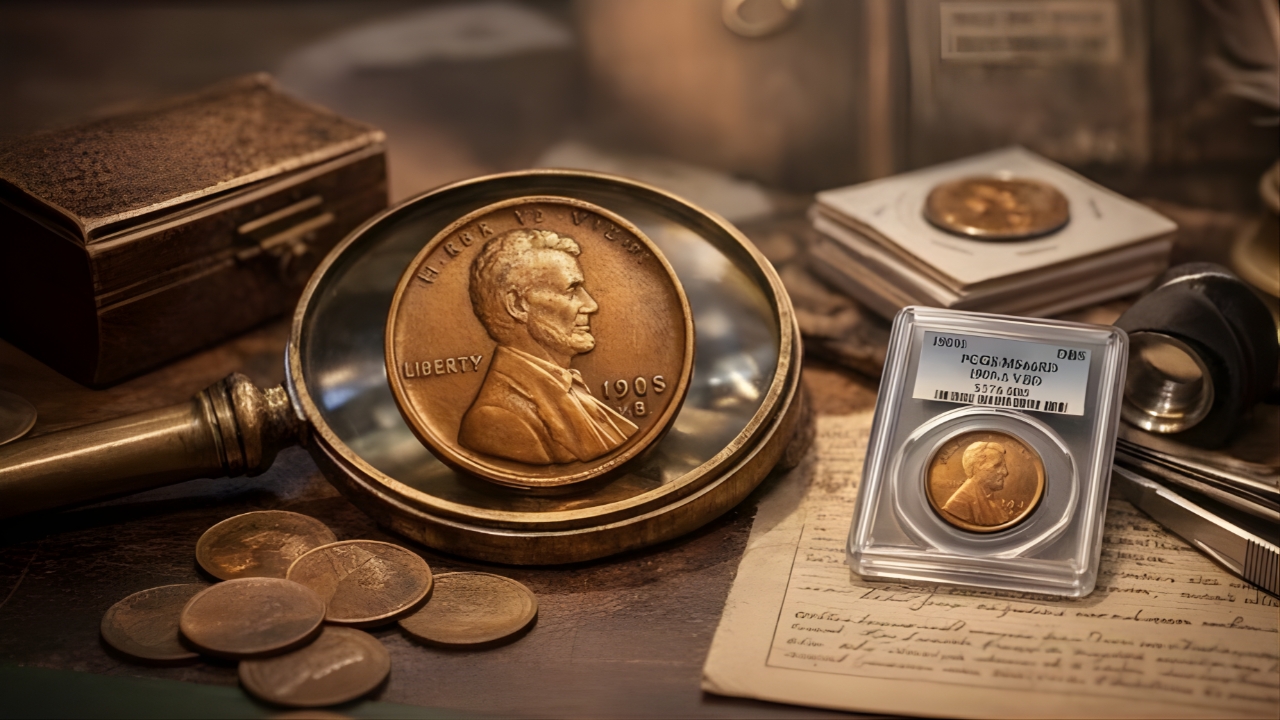
The Lincoln Wheat Penny, first issued in 1909 to commemorate Abraham Lincoln’s centennial birth, is one of the most iconic and sought-after coins in U.S. numismatics. With its distinctive wheat stalk reverse and classic Lincoln portrait, this penny has captured the interest of collectors for over a century.
While most Lincoln Wheat Pennies are common and modestly valued, certain rare examples have sold for extraordinary sums, with some fetching as much as $576,000. Understanding the factors that contribute to these values including mint marks, key years, errors, and coin condition is essential for both novice and seasoned collectors.
This guide explores the history, rarity, grading, and investment potential of Lincoln Wheat Pennies, helping collectors make informed decisions.
Introduction to Lincoln Wheat Pennies
The Lincoln Wheat Penny was introduced in 1909 as a replacement for the Indian Head cent. Designed by Victor David Brenner, it was the first widely circulated U.S. coin to feature a real person. The obverse displays Lincoln’s portrait, while the reverse features two stylized wheat stalks, symbolizing prosperity. The coin remained in circulation until 1958, when it was replaced by the Lincoln Memorial design.
Collectors prize the Wheat Penny not only for its historical significance but also for the range of mint marks, low mintage years, and known errors that create substantial variation in value. While many coins are readily available in circulation, rarities can command extraordinary prices, making them an attractive focus for collectors and investors alike.
Key Years That Drive Value
The value of a Lincoln Wheat Penny varies dramatically depending on the year and mint. Some of the most significant high-value coins include:
1909-S VDB: One of the most famous and valuable Wheat Pennies, featuring the designer’s initials on the reverse. Coins in mint condition have sold for hundreds of thousands of dollars.
1914-D: A Denver mint coin with limited mintage, particularly valuable in uncirculated condition.
1922 No D: The Philadelphia-minted coin with a missing mint mark is highly prized by collectors.
1931-S: A San Francisco coin with low production, sought after in high grades.
1955 Double Die: A rare error coin with a pronounced doubling of the date and lettering, extremely popular among collectors.
Being aware of these key dates allows collectors to focus on coins with the highest potential for appreciation.

Understanding Mint Marks
Mint marks indicate where a coin was produced and can significantly affect its value. Lincoln Wheat Pennies were minted at three main facilities:
P (Philadelphia): Typically produces the largest quantities. Most Philadelphia coins are common, though notable exceptions exist.
D (Denver): Mid-range production numbers, with several rare years commanding premiums.
S (San Francisco): Usually lower mintage, with many high-value coins originating here.
Collectors pay close attention to mint marks because coins from low-production facilities or with unusual minting characteristics are often the most valuable.
Notable Errors and Varieties
Error coins are highly sought after in the numismatic world, and Lincoln Wheat Pennies are no exception. Key errors include:
Double Dies: Coins with a doubled image or lettering, such as the famous 1955 Double Die obverse, are extremely collectible.
Off-Center Strikes: Coins struck off-center can be rare and valuable depending on severity.
Die Cracks and Cuds: These occur when the coin die develops cracks or breaks, creating raised anomalies on the coin surface.
Wrong Planchet: Coins struck on incorrect metal blanks or mismatched planchets can become highly desirable.
Even minor variations can dramatically increase the value of a Wheat Penny, making careful inspection essential for collectors.
Grading Lincoln Wheat Pennies
Condition, or grade, is one of the most critical factors influencing a coin’s market value. Coins are graded on the Sheldon scale, which ranges from 1 (poor) to 70 (perfect mint state).
Good (G-4 to G-6): Heavy wear with major design elements visible.
Very Fine (VF-20 to VF-35): Moderate wear with most details clear.
Extremely Fine (EF-40 to EF-45): Light wear with nearly all details intact.
About Uncirculated (AU-50 to AU-58): Slight traces of wear on high points, original luster visible.
Mint State (MS-60 to MS-70): Uncirculated coins with no signs of wear; higher-grade MS coins are extremely valuable.
Professional grading by organizations such as PCGS or NGC provides authentication and a verified grade, often boosting a coin’s market value.
Market Trends and Current Values
While most Lincoln Wheat Pennies are worth between a few cents and a few dollars, certain coins can reach extraordinary sums. For example, a 1909-S VDB in mint condition has been auctioned for over $576,000, reflecting both rarity and collector demand.
Other high-value examples include:
1914-D MS-65: approximately $20,000–$25,000
1922 No D MS-63: around $15,000–$18,000
1955 Double Die MS-65: upwards of $10,000
Values fluctuate based on condition, demand, and rarity. Collectors should stay informed about market trends to make strategic acquisitions.

Tips for Collectors
Building a Lincoln Wheat Penny collection requires knowledge and patience. Key advice includes:
Focus on Key Dates: Target rare mint years and high-demand errors.
Check Condition: Higher-grade coins are worth significantly more.
Seek Professional Grading: Certified coins provide assurance and can increase resale value.
Research Auction Results: Studying recent sales helps determine realistic market value.
Store Coins Properly: Use holders, albums, or capsules to prevent damage and preserve value.
By following these guidelines, collectors can create a collection that is both enjoyable and potentially lucrative.
Investing in Lincoln Wheat Pennies
Beyond personal enjoyment, Wheat Pennies can be considered an investment. Rare coins, particularly in high grades, often appreciate over time. Collectors should diversify by acquiring coins from multiple key years and mint marks, including some error coins, to balance potential risk and reward. Patience and careful selection are essential for maximizing long-term value.
Final Verdict
The Lincoln Wheat Penny remains one of the most collectible U.S. coins, offering a unique combination of historical significance, aesthetic appeal, and investment potential. While the majority of pennies are common, certain rare coins, especially from key years or with notable errors, can command extraordinary prices—sometimes reaching $576,000.
Understanding mint marks, grading, errors, and market trends is essential for collectors seeking to acquire valuable pieces. Whether as a passion or an investment, Lincoln Wheat Pennies continue to captivate numismatists around the world.
Disclaimer
This article is based on historical data, auction records, and numismatic information. Coin values fluctuate based on market conditions, rarity, and condition. Readers should verify details with professional grading services, authorized dealers, or official sources before making any purchasing or investment decisions.
